Graveyard Keeper 2 Gold Guide — Fast Coin & Golden Nuggets
Graveyard Keeper 2 gold means two things: coin income and Golden Nuggets. Follow the water-to-paint sale and the sluice box route, checked frame by frame.
FAQ
What does "gold" mean in Graveyard Keeper 2?
What is the fastest way to make money in Graveyard Keeper 2?
How do you get Golden Nuggets in Graveyard Keeper 2?
Can zombies collect Golden Nuggets at the Sluice Box?
How do you turn Golden Nuggets into Golden Ingot?
What “gold” means in Graveyard Keeper 2
The keyword “Graveyard Keeper 2 gold” points at two different things, and they need different plans:
- Gold as currency. Silver and gold coins, where 100 silver equals 1 gold. This is what you spend at traders and what the Bishop charges for Steel Ingot.
- Golden nugget and Golden ingot. The metal line: nuggets come out of the ground, ingots come out of a furnace or an alchemy bench, and the ingot is what late-game recipes and the Golden Zombie Collar consume.
A third sense exists — gold-star quality on wine and food — which is a recipe tier, not money. It only matters when a customer insists on it, so this page covers it in one short section instead.
| What you are after | Route checked in this guide | Where the evidence comes from |
|---|---|---|
| Coin, fast | Garden well → Paint at Laboratory I → sell to the Port Trademaster | Two independent walkthroughs with priced trade windows |
| Golden nugget | Sluice Box with the Gold Digger perk, or Formulation Bench transmutation | On-screen item card and sifting test |
| Golden ingot | Furnace II smelting, or Formulation Bench transmutation | Community recipe data |
Step 1 — Unlock the well, glassblowing and paint
The paint loop needs four unlocks before it pays anything:
- The Port Area. Progress the town storyline until the docks open; the trader who buys the paint stands there.
- A garden well from the first garden upgrade in the Farming branch, so you can draw water without a trip.
- Glassblowing in the Metallurgy branch, which unlocks Alchemy Flasks I — the checked tooltip names Furnace I and Furnace II as the benches that craft it.
- Paint in the blue Anatomy and alchemy branch. Its tooltip names Laboratory I and Laboratory II as the crafting stations.
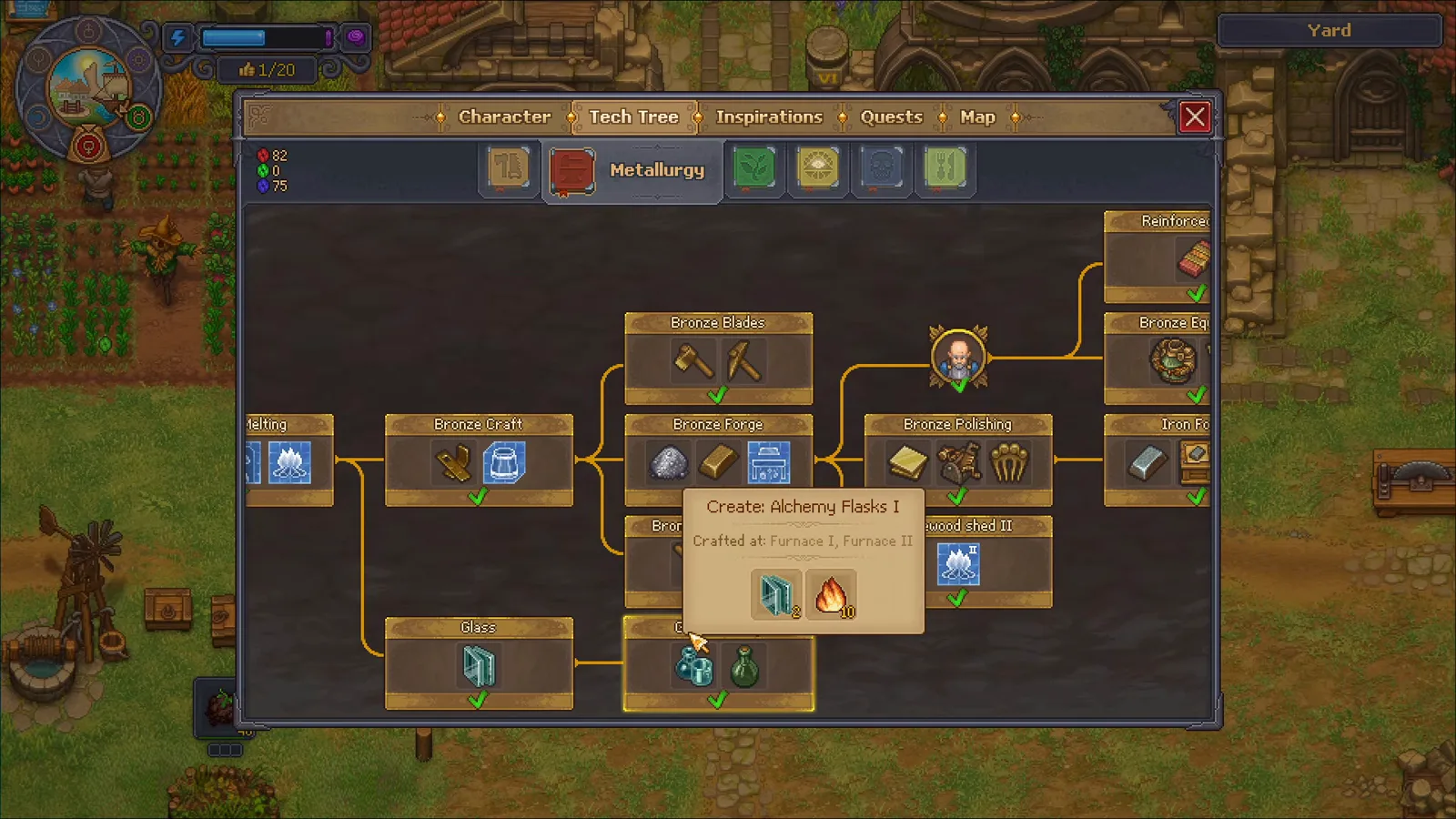
The Metallurgy branch is where Alchemy Flasks I unlocks, and the tooltip points at the furnaces. Source frame: Born 2 Game at 1:00.
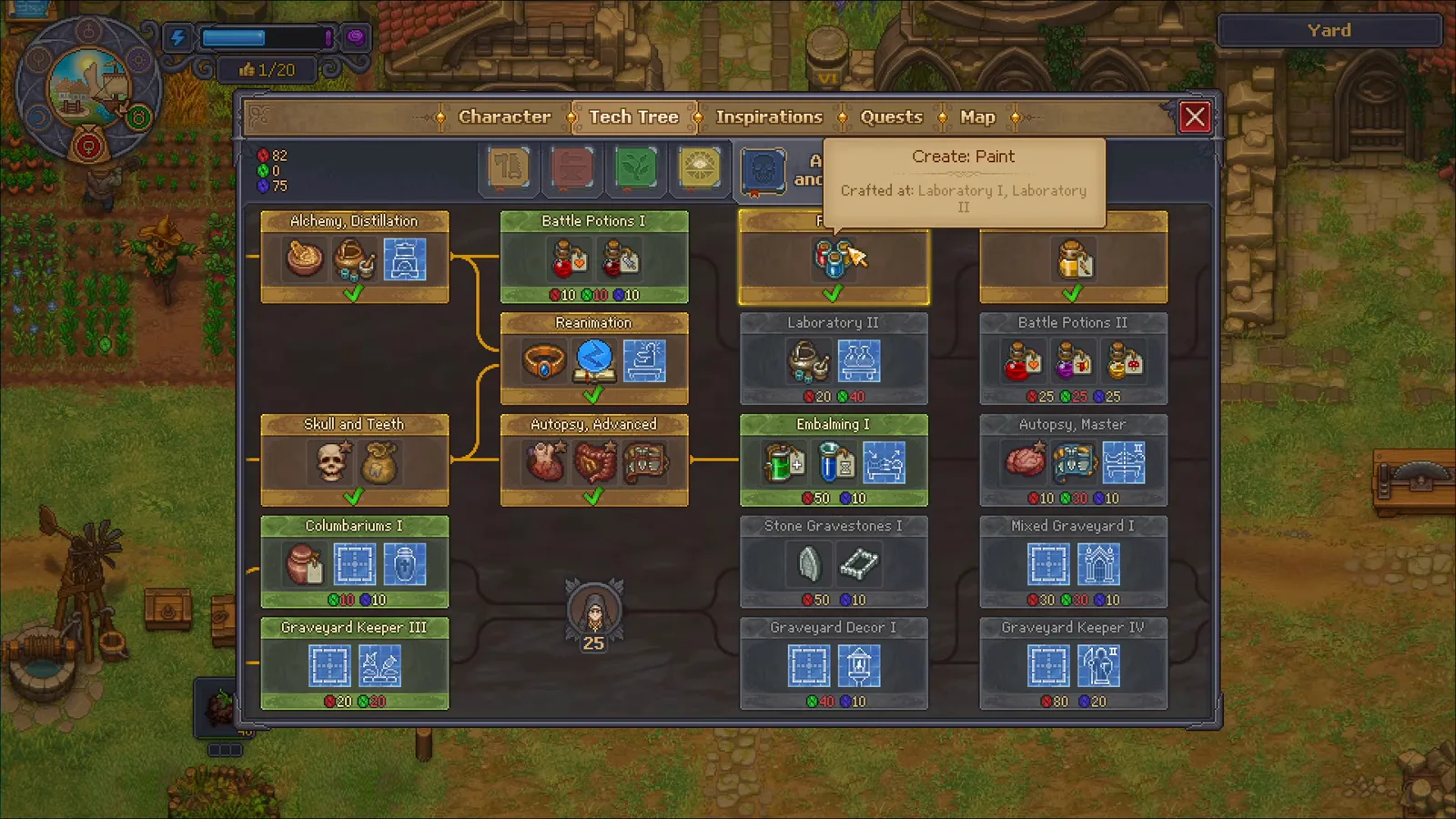
The Paint node sits in the blue Anatomy and alchemy branch; its tooltip names Laboratory I and II. Source frame: Born 2 Game at 1:08.
Step 2 — Draw water and make flasks
Water is the one input you never run out of. The checked run draws it straight from the garden well and the pickup text counts the units for you: the creator describes roughly 20 units per draw, while the frame at that moment reads +27. Watch your own pickup line rather than trusting either number, because well upgrades and perks are not the same in every save.
Glass is the bottleneck: it needs sand and furnace fuel. Sand is free in bulk from the river bank by the bridge in the Inquisition Base area, and the Furnace I panel in the same run lists Glass and Alchemy Flasks I side by side, so both steps happen at one bench. Fill the flasks with the water you just drew.
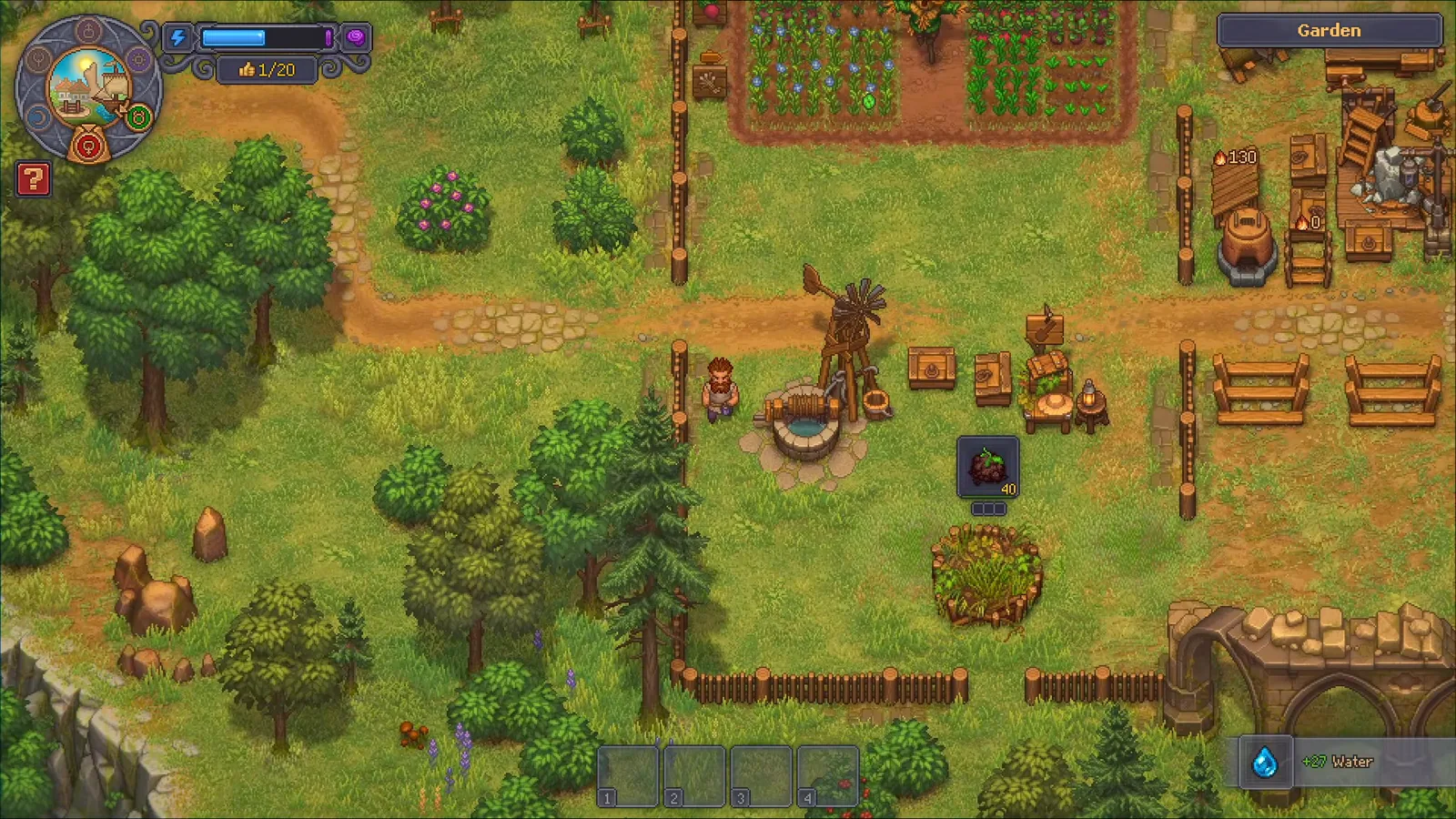
The checked run draws water at the garden well; the pickup text does the counting for you. Source frame: Born 2 Game at 1:20.
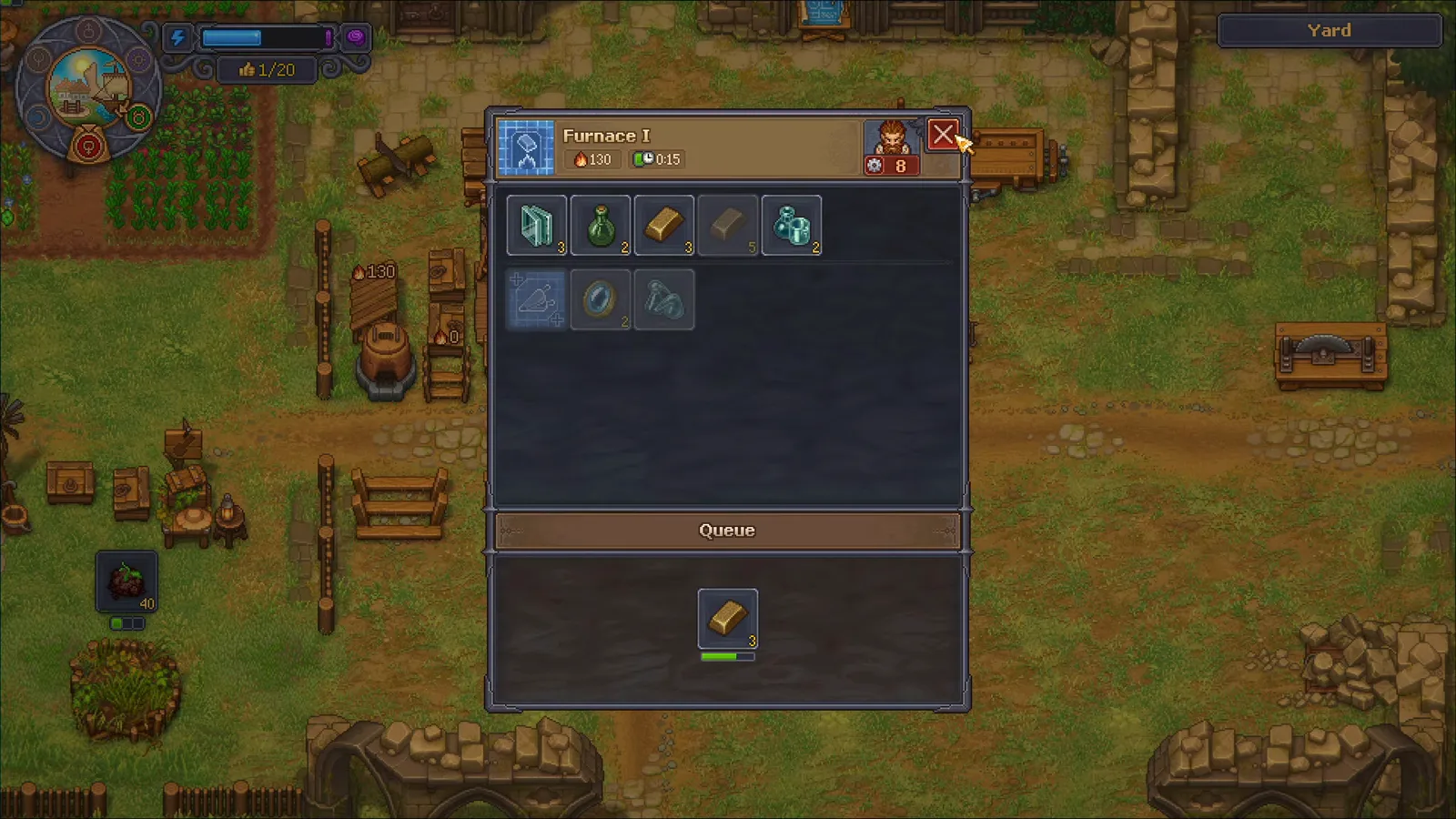
Glass and Alchemy Flasks I share the Furnace I recipe list in this run. Source frame: Born 2 Game at 1:35.
Step 3 — Mix paint at Laboratory I
At the alchemy tower, Laboratory I turns two water flasks into one Paint. The checked frame shows both ingredient slots loaded and the Paint output ready, and the creator notes the craft costs no energy, so you can batch it without stopping to eat. It also pays green tech points, which quietly funds the alchemy branch you are already standing in.
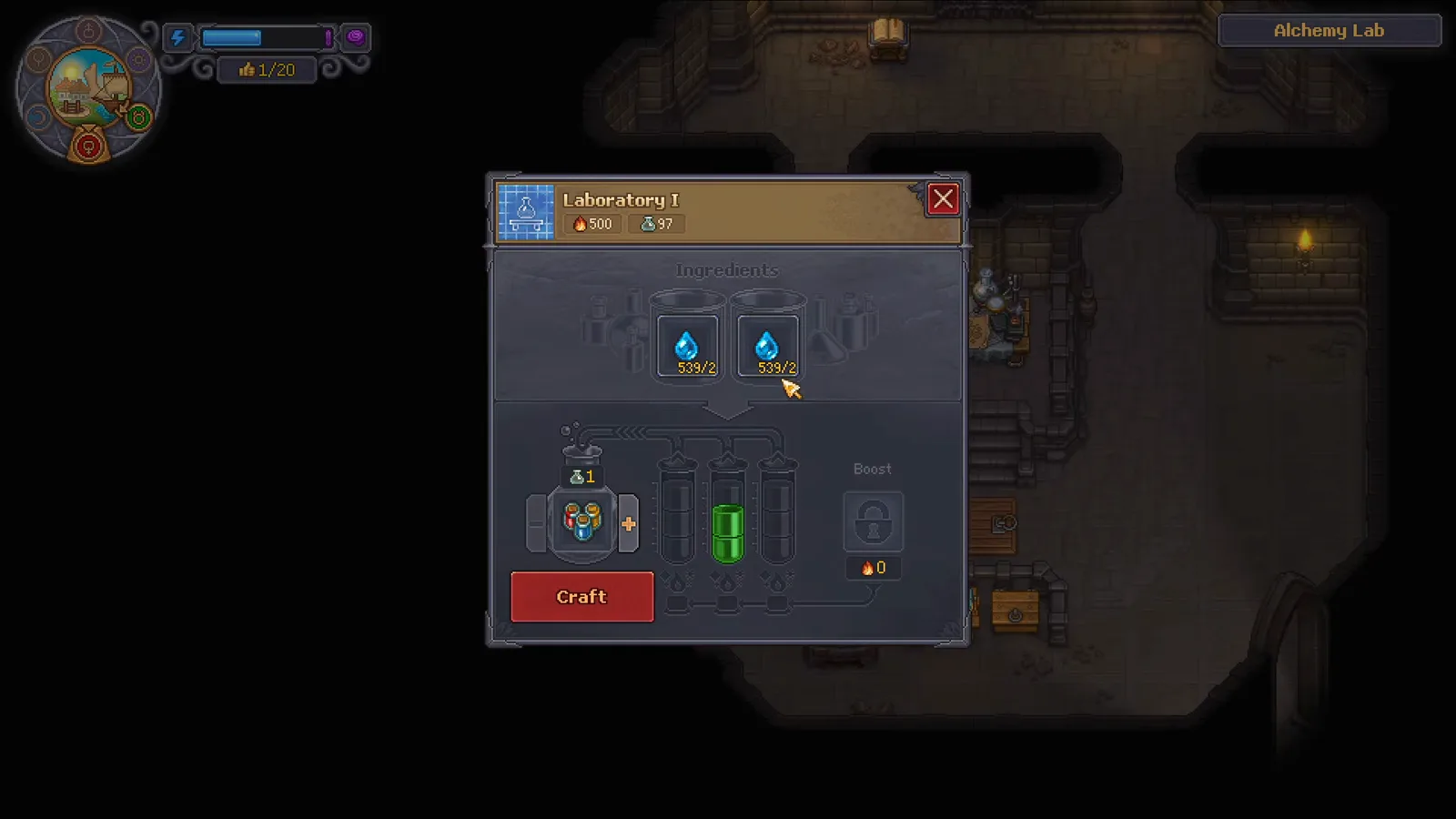
Laboratory I takes two water flasks per Paint — the whole loop costs no energy. Source frame: Born 2 Game at 2:48.
Runes explain why this works. Studying water reveals a single green rune, and Paint is a two-green formula, which is exactly two servings of water. The rune map behind every mix — and the separate green-plus-blue blend that produces Dream Dust — is covered in the alchemy guide and on the Dream Dust page.
Step 4 — Sell the paint at the port
Carry the stack to the Trademaster at the Port Area. Both checked creators sell paint there, and both confirmation cards price the stack in gold, silver and bronze:
- Born 2 Game: 97 Paint → 1 gold 54 silver 60 bronze.
- Wasting: 119 Paint → 1 gold 78 silver 60 bronze.
That is roughly 1.5 to 1.6 silver per unit across two independent runs, which is the useful takeaway. The exact figure belongs to the trade card in front of you: the same window shows the trader’s remaining coin, and when their purse runs dry the price stops being interesting — spend the proceeds and come back after the stock refreshes.
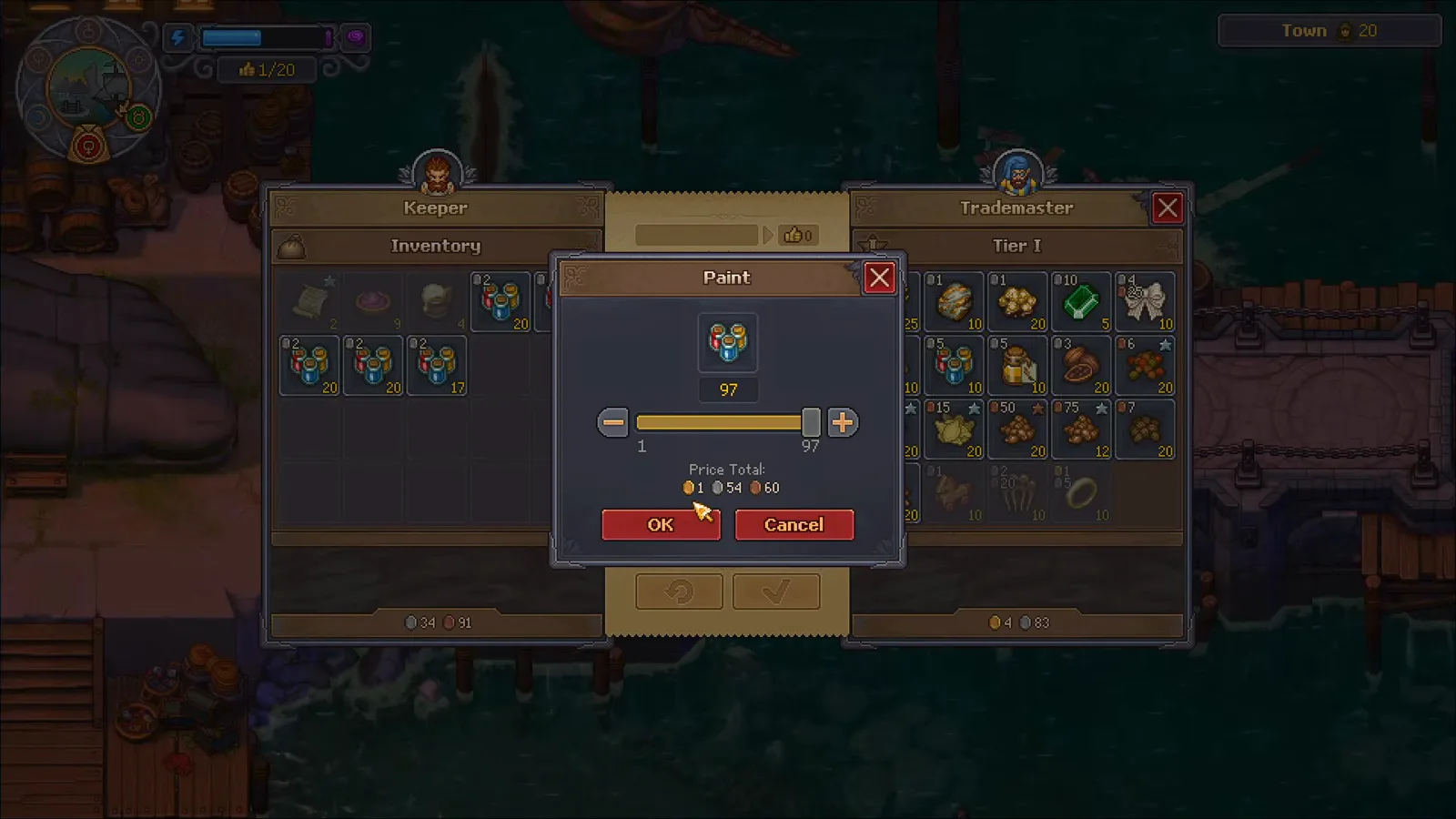
97 Paint was one sale in this run — the trade card, not this screenshot, sets your price. Source frame: Born 2 Game at 3:45.
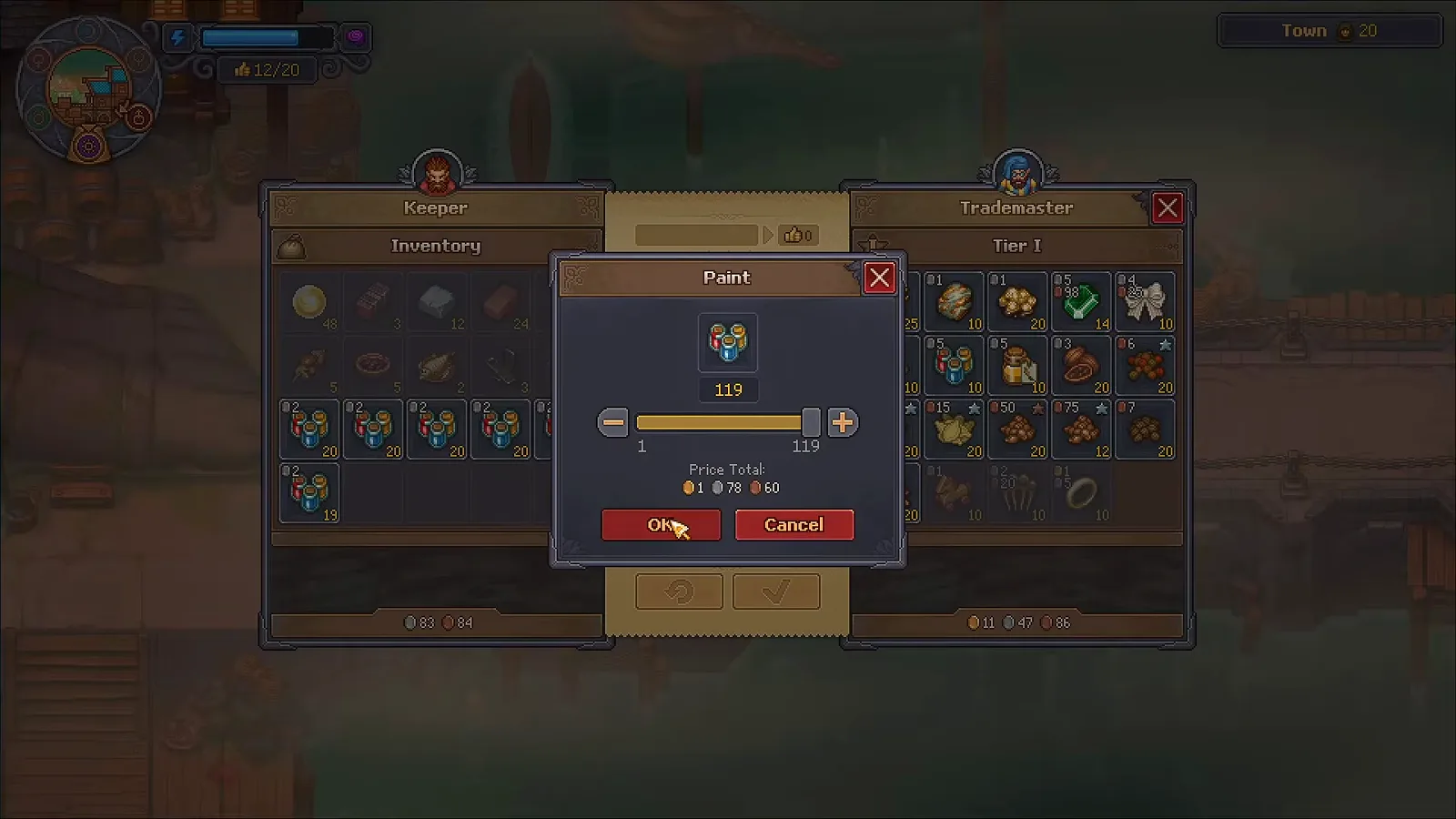
The independent run prices 119 Paint slightly differently, which is exactly why you read the live card. Source frame: Wasting at 1:08.

How to Make Money FAST in Graveyard Keeper 2 — the water-to-paint run (Born 2 Game)
The same loop also appears in the shorter creator’s run, which starts from glass and flasks and ends at the same dock trader:
The Easiest Money Method You Missed — paint into coin (Wasting)
Golden Nuggets from the sluice box
Golden Nuggets are a different job. They do not come from selling anything: they drop while you sift sand, and only after you buy the right perk.
- Open Inspirations and go to the mechanical perks.
- Take Miner, which also makes gems drop from copper veins.
- Take Gold Digger, which is locked behind Miner. Its text says gold starts appearing when sifting sand.
- Feed sand to the Sluice Box and work it yourself.
The checked test sifted 50 times and finished with 21 Golden Nuggets — about a 40% hit rate on that run. It is one measurement, not a published drop table, so plan for a batch rather than a guaranteed number.
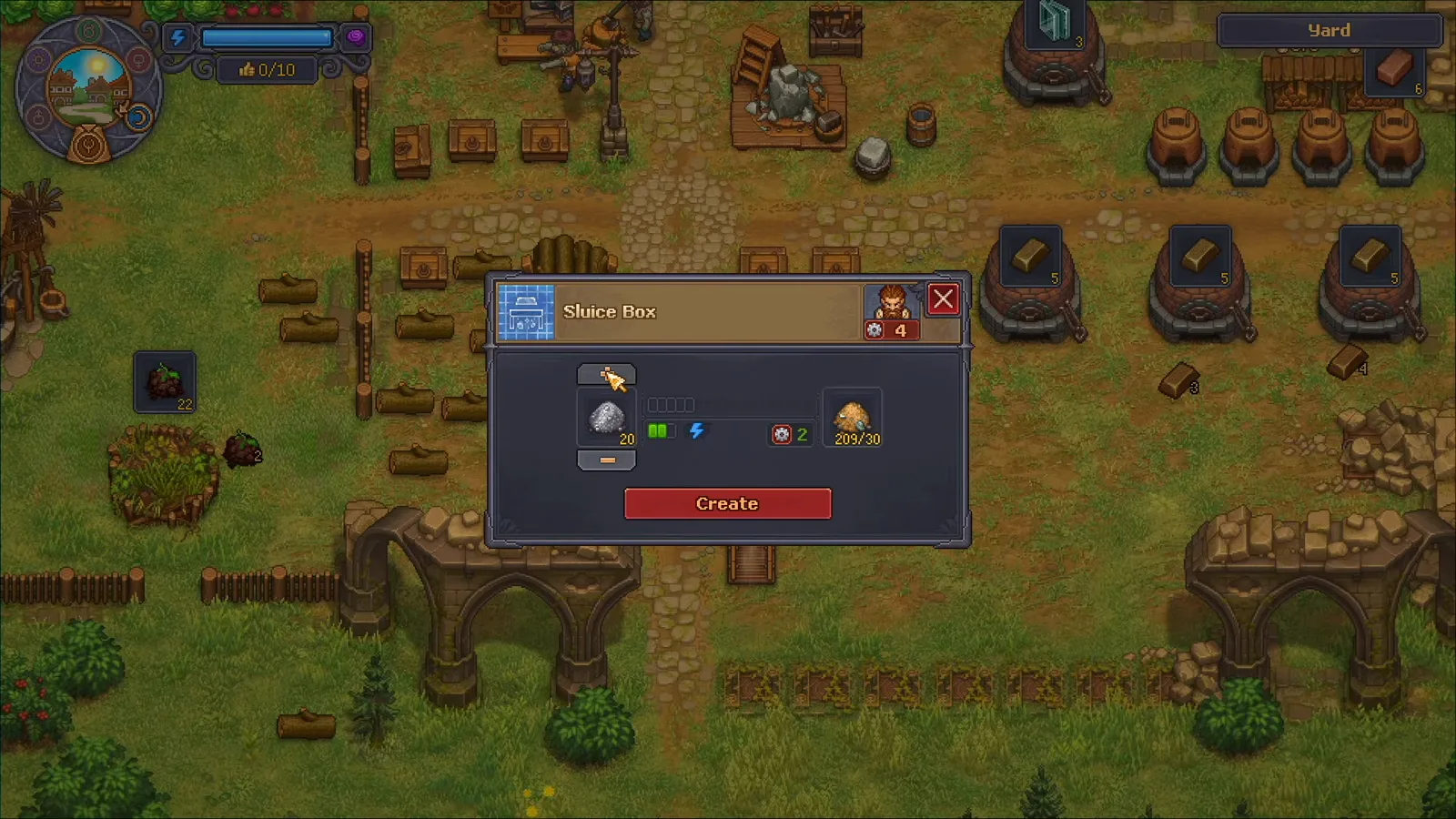
Feed the Sluice Box sand; with the Gold Digger perk, golden nuggets start appearing. Source frame: Recreational Suffering at 0:48.
Two details from the same test are worth knowing before you build a nugget farm:
- Zombies do not produce Golden Nuggets at the sluice box. The creator left workers on one for more than 100 attempts and got none, while the player-run bench produced nuggets. Work the sluice box yourself.
- The Miner perk pays on its own. Mining the copper vein with Miner running gave 8 gems in 33 full cycles, which the creator estimates at roughly 20-25%. Those gems are a second income trickle while you wait for nuggets.
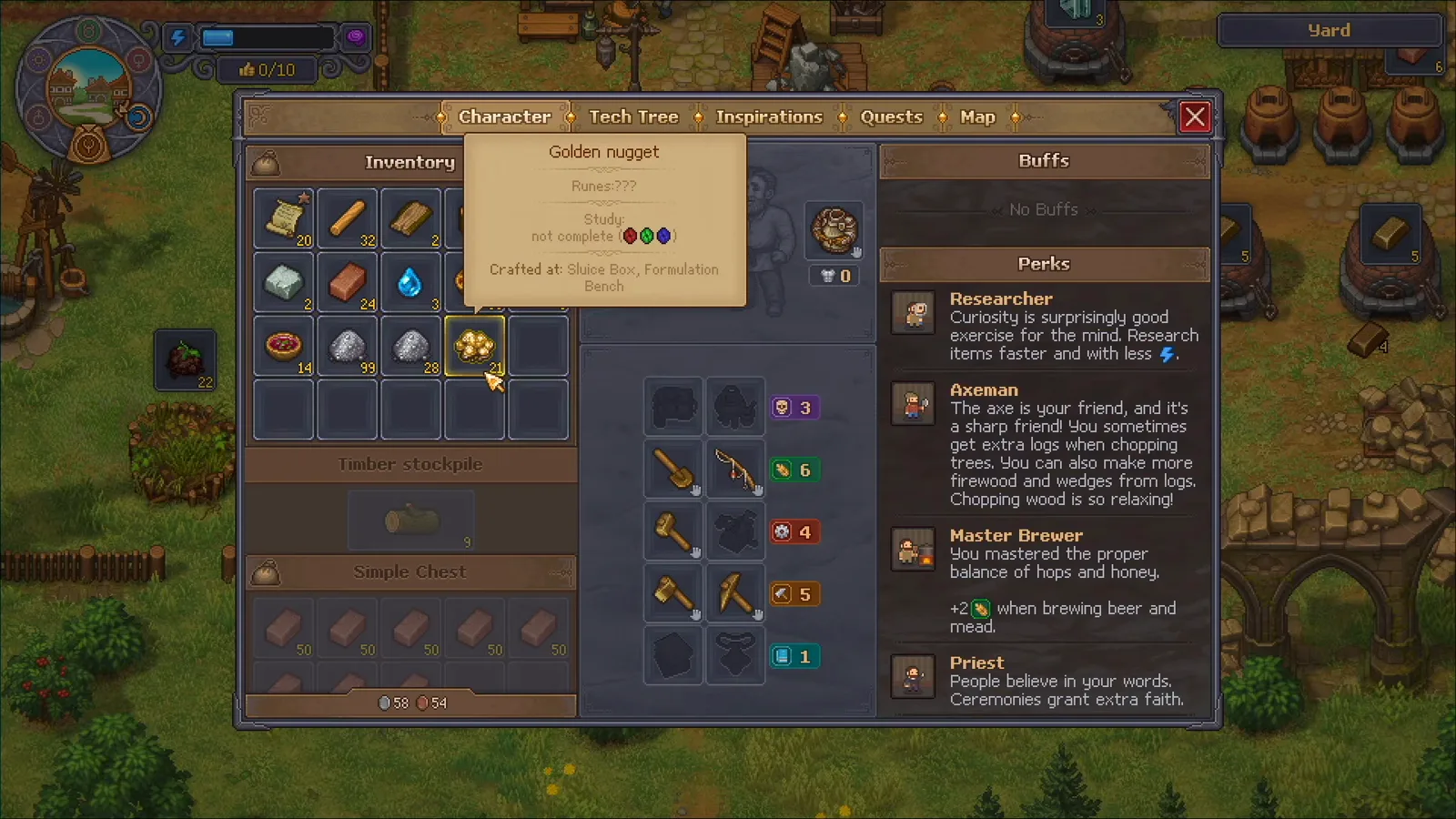
The item card lists both sources and the stack of 21 nuggets from 50 sifting attempts. Source frame: Recreational Suffering at 2:10.

How to Get Gems + Golden Nuggets in Graveyard Keeper 2 (Recreational Suffering)
Golden Nugget to Golden Ingot
The nugget item card lists exactly two sources: the Sluice Box and the Formulation Bench. The ingot then comes from one of two community-documented recipes:
| Recipe | Station | Output |
|---|---|---|
| 3 Golden nugget + 30 Fuel | Furnace II with the Bellows extension (Iron Forge tech) | 2 Golden ingot, 9 ticks, mastery 4 |
| 1 Iron Ingot + 1 Philosopher Stone | Formulation Bench | 1 Golden ingot, 12 ticks, mastery 8 |
| 1 Iron Ore + 1 Philosopher Stone | Formulation Bench | 1 Golden nugget, 8 ticks, mastery 6 |
The transmutation row is the interesting one: it bridges iron straight into gold when nuggets are scarce. It also explains the real cost of the line — Philosopher Stones, mixed at Laboratory II from a 3 red / 3 green / 3 blue formula, and 30 Fuel per smelt. Firewood to the shed to Fuel is the quiet constraint on any gold batch.
See the Golden ingot item page for what the bars are spent on, and the Steel Ingot page for the neighbouring metal that works completely differently: Steel Ingot cannot be smelted at all and is only bought from the Bishop.
The rest of the coin economy
Two more numbers are worth keeping in mind when you compare routes:
- Steel Ingot is the price anchor, not income. The Bishop sells it at 1 silver each, with 100 silver equal to 1 gold — no discounts and no buy-back. It is a reliable way to convert paint money into something useful.
- Raw ore is pocket money. Iron Ore sells for 75 bronze in community data — fine early, not a scale play.
For volume, move the same logic into the production systems: Town Warehouse orders are accepted on Pride day and turn factory output into payouts, and the factory production calculator tells you whether your benches can keep up with two active orders. Because stations pull materials from containers in the same region, storage placement decides how much walking the loop costs — the layout guide covers that. Alcohol is the other alchemy-adjacent seller: the Distillation Cube turns 1 Any Wine plus 2 Clay Urn into 4 Alcohol.
Gold-star wine is not gold coins
One more “gold” trap: mercenaries eventually stop accepting coin and ask for wine with gold stars. That is a quality tier, not currency. A separate checked walkthrough builds it end to end — silver grapes into silver juice, four bottles into silver wine, Umami mixed from 4 green and 4 blue runes, then the Kitchen Table drink improvement that lifts silver wine to gold. Keep the finished bottles in your pocket, not a chest, or the hire prompt stays grey.
Common mistakes
- Treating one screenshot as a price list. The two checked paint sales priced the same item differently per stack; the live trade card is the only figure that matters.
- Sifting sand without Gold Digger. Without the perk the sluice box will not hand you nuggets, and it is easy to blame luck.
- Assigning a zombie to the sluice box. The checked test produced no nuggets from zombie labour.
- Forgetting fuel. A nugget stack is worthless if Furnace II has no Fuel; stock Firewood before starting a smelting run.
- Confusing the two metal rules. Golden ingot is craftable. Steel Ingot is not — it is bought from the Bishop, and no vanilla recipe turns ore into steel.
Sources and verification
Steps, prices and item cards were checked on 2026-10-06 against three independent English walkthroughs. Provenance differs by source: the paint-loop videos were published after the 22 September 2026 release and reflect the shipping build, while the Sluice Box and Golden Nugget run is pre-release demo footage, so its drop-rate figures are demo values.
- Born 2 Game’s 271-second money run — the full water-to-paint chain, the tech unlocks, and the 97 Paint sale at 1 gold 54 silver 60 bronze.
- Wasting’s 78-second money short — independently repeats the flask-to-paint loop and sells 119 Paint for 1 gold 78 silver 60 bronze at the same port.
- Recreational Suffering’s 309-second nugget test — the Gold Digger perk, the 50-attempt sifting run, the zombie test, and the Golden nugget item card.
- Referenced only for the gold-star wine section, not embedded: the gold wine walkthrough (silver wine into Umami into gold-star wine at the Kitchen Table).
The ingot and Fuel recipes are community wiki data rather than on-screen captures, and the drop rates above are single measurements from one creator’s run. Recheck the live card after any patch.
Related Articles
guides
Graveyard Keeper 2 Alchemy Guide: Runes, Labo and Folio
Graveyard Keeper 2 alchemy explained: study ingredients at the Study Table, match red, green and blue runes in the Labo, and craft Dream Dust and potions.
guides
Graveyard Keeper 2 Layout Guide — Yard Zones & Factory Lines
Plan a Graveyard Keeper 2 layout that works: zone same-area storage, respect the two-build grave limits, power the factory, then route belts tile by tile.
items
Graveyard Keeper 2 Dream Dust — How to Make It Step by Step
Dream Dust in Graveyard Keeper 2 takes 1 green rune and 1 blue rune at the Labo. Study Water and Blood at the Study Table, stock a flask, and mix it.
Was this helpful?
Thanks for the feedback!